


 Español
 Deutsch
 日本語
日本語 한국어
한국어
Up and down sliders mechanism
Up and Down Sliders Mechanism An up and down slider mechanism is a mechanical system designed to facilitate linear motion in both vertical directions, allowing components to move upward and downward smoothly and precisely. These mechanisms are widely used in various applications, including automation, industrial machinery, medical devices, and consumer electronics, where controlled vertical movement is required. Key Components 1. Slider Rail or Guide: The primary structure that supports and guides the moving component. It ensures stability and minimizes friction during motion. 2. Actuator: The driving force behind the movement, which can be electric (e.g., linear motors, stepper motors), pneumatic (air cylinders), or hydraulic (fluid-driven pistons). 3. Bearings or Bushings: Reduce friction between moving parts, ensuring smooth operation. Common types include ball bearings, roller bearings, or plain bushings. 4. Lead Screw or Belt Drive: Converts rotational motion into linear motion. A lead screw provides high precision, while a belt drive offers faster movement. 5. Support Frame: Provides structural integrity, keeping the mechanism aligned and stable under load. 6. Control System: Includes sensors, limit switches, and programmable logic controllers (PLCs) to regulate movement, speed, and position. Working Principle The mechanism operates by converting input energy (electrical, pneumatic, or hydraulic) into linear motion. For example, in an electric slider: - The motor rotates a lead screw or belt, translating rotational force into vertical movement. - The slider block moves along the rail, guided by bearings to minimize resistance. - Sensors detect position and adjust speed or stop the movement at predefined points. Advantages - Precision: Allows accurate positioning, essential in CNC machines and medical equipment. - Smooth Operation: Low-friction components ensure consistent movement. - Load Capacity: Can be designed to handle varying weights, from lightweight electronics to heavy industrial parts. - Customizability: Adjustable speed, stroke length, and force to suit different applications. Applications - Industrial Automation: Adjusting worktable heights in assembly lines. - Medical Devices: Positioning surgical tools or imaging equipment. - Consumer Electronics: Adjustable monitor stands or retractable smartphone components. - Automotive: Seat adjustments or automated lifting mechanisms. Conclusion Up and down slider mechanisms provide reliable, controlled vertical motion, making them indispensable in modern engineering. Their versatility, precision, and adaptability ensure efficient performance across multiple industries.
Products
Category:
-
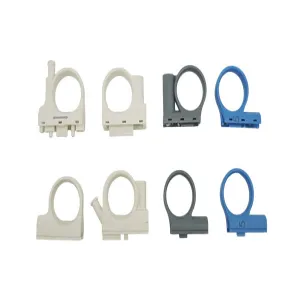
Up and down sliders
Category: Medical equipment categoryBrowse number: 14Number:Release time: 2025-12-16 10:55:51Up and down sliders are precision mechanical components designed to enable controlled vertical movement in a wide range of applications. They consist of a carriage or platform that moves along guide rails, supported by bearings or bushings to ensure smooth, accurate motion. Constructed from materials such as stainless steel, aluminum, or engineering plastics, these sliders offer durability, corrosion resistance, and high load-bearing capacity. Commonly used in automation systems, laboratory equipment, industrial machinery, and consumer devices, up and down sliders enhance operational efficiency, positioning accuracy, and repeatability. Proper installation and maintenance ensure long-lasting performance and reliability in demanding environments.
News
Category:
No search results found!
Case
Category:
No search results found!
Video
Category:
No search results found!
Download
Category:
No search results found!
Job
Category:
No search results found!
Featured Products
No search results found!



 WhatsApp
 Phone
Phone